Poisoned Chalice
I was carefully sucking the venom from a yellow-veined Puff-Toad when my servant Igorio entered the laboratory. He refrained from speaking, as he knew that the task in which I was engaged was a delicate – indeed potentially fatal – one. I spat out the last of the venom into a bowl and rinsed out my mouth with a foul-tasting solution (in fact the Toad venom was much pleasanter, tasting as it did of apricot-juice).
I wiped my lips and turned an inquiring gaze upon him.
“There is a personage without, master, who wishes to see you,” announced Igorio.
“Is it a gentleman or a lady?” I asked.
“Could be either, sir. They all look the same to me these days.”
“That’s because you’re half-blind. I keep telling you to let me have a look at those cataracts of yours. Anyway, never mind; tell them I’ll be with them in a moment.”
Igorio shrugged and withdrew. I removed my gloves and wiped my hands. I knew that the old fool would never consent to let me ‘take a look’ at his cataracts, and even if I did it probably wouldn’t help him. Anyway, I preferred Igorio the way he was. His eyesight was terrible but his sense of hearing was terrific. He was invaluable for eavesdropping on people, and often overheard things that were very useful. It rarely made any sense to him, but he had a remarkable memory, and could repeat seemingly endless conversations, even in foreign languages, of which he couldn’t understand a word.
I threw off my lab-robe, donned one that was more suitable for receiving clients, and walked briskly into the Audience Chamber.
Continue reading >
“What can I do for you?” Igorio was right; it was difficult to tell what gender my visitor was, muffled up as he or she was in a dark blue robe. But the voice gave it away.
“Is this room private?” growled a gruff male voice.
“Certainly,” I said reassuringly, and then, not raising my voice added, “Igorio, you can stop skulking around out there. Go and take a walk. No need to hurry back.”
A few moments later, the door slammed. I smiled encouragingly at my suspicious guest. “I assure you that we are now alone.”
He grunted. “Very well. Then I will waste no further time but come straight to the point: I want you to poison my wife.”
I almost sighed. Another petty domestic! Couples nowadays didn’t even try to arbitrate their differences – they just reached for the poison bottle. It got depressing sometimes. Of course, poisoning was perfectly legal (though other forms of premediated murder were not; go figure) but for a large number of people it seemed increasingly to be the first thing they thought of (and usually the second and the third, too). There again, what was I grumbling about? I was making a handsome profit by the fashionable trend to poison one’s nearest and not-so dearest, so why worry? Except that slipping an estranged spouse a dose of something deadly didn’t exactly bring job satisfaction.
“Well, that is easily arranged. I have a wide range of preparations, from the instantaneous and painless to the slow and agonizing. It all depends how much you – “
My visitor waved a hand impatiently. “That is not important. The important thing is that her death will not be connected in any way with me.”
And my mysterious client threw back the hood of his robe.
I could not restrain a gasp of surprise. “Why, Master Artash! This is indeed an honour – “
“Never mind about the honour,” growled Artash. Given that he was here to arrange his wife’s death by poison, the comment was probably apposite. “I have a little job for you.”
I bowed my head slightly and waited for him to continue. It was not often that I received visits from persons as eminent as my present guest, Arturo Artash, the highly successful and publicity-friendly perfumier. Well, not that often, anyway.
Artash took a few restless steps across the room. He stared at his own reflection in a mirror for some moments. Then he fixed me with his famous glittering eyes.
“Master Lomaxx – I know that since Yerudaa was assassinated, you are the best Poisoner in the city…” (I acknowledged this grateful compliment) “…And that is why I have come to you. You recognised me as soon as you saw me; if you were to see my wife, you would no doubt recognise her equally easily. She is, as you probably know, Councillor Cerith Ducanon, an increasingly influential figure in the so-called Supreme Government. In fact, she’s too influential; her Department has been meddling in affairs of trade and commerce for too long, and now things have got so bad she’s even interfering in the perfume industry! She’s drafted legislation banning the use of certain of our most important ingredients, such as spermaceti wax, ocelot, and even skunk glands!”
Artash wiped his brow, momentarily baffled anew at such perverse treachery on the part of his wife. He went on:
“In short, there is no love lost between my wife and I – nor has there been for quite some time. So, it is for her that I am engaging your services, Master Lomaxx.”
“Are you sure about that, Master Artash?” I inquired. “It’s a big step to take – and an expensive one – and for a man in your position…”
“Damn the expense,” interrupted Artash. “I can afford it. As for being in my position, I know that most of that expense goes not on the poison itself but on your famous subtlety and discretion. So I’m confident that no-one would ever link her death to me. After all, in politics, one picks up a lot of enemies, and Cerith is no exception.” He laughed unpleasantly. “Besides – “ his tone changing to one of prickly defensiveness – “everyone gets rid of their spouse in the style and fashion industries – that is, anyone who’s anyone. So even if this banning of skunks’ glands and whatnot wasn’t around, I’d probably still have to trade her in for a newer model.” He laughed again. I felt a fleeting desire to punch him, but immediately supressed it. “However,” he went on, “Cerith has powerful friends in the Government – that’s why I want this done discreetly – understand?”
“I understand, sir,” I said smoothly. “I can start work on your commission right away. Can you provide me with any personal information on your wife? It will help me to build up a picture of her, and enable me to devise a means of dispatch – er – appropriate to her predispositions and weaknesses.”
Artash nodded curtly. “I thought you might. Here – “
He took out a wallet folder from inside his robe, and flung it at me.
“Everything you need is in there – I hope.” He started to turn away, then stopped. “You know – one thing occurred to me on the way here: Cerith suffers from bad teeth – always has done, ever since I knew her. She’s got an appointment booked with her dentist next week. Maybe you could get her with a glass of poisoned mouthwash – you know, that pink stuff they make you swill your mouth out with every time the dentist has a scratch around inside?” He chuckled unpleasantly again. “Not a bad idea, huh? Do I get a discount for coming up with it?”
I smiled. “I’m sorry, Master Artash. Your idea could never work.”
His smile faded. “Why not?”
“Because dental mouthwash looks and tastes too much like poison to begin with.”
Artash scowled and made for the door. “Don’t try to contact me. I’ll contact you, in a week’s time.”
I closed the door behind him. Bad teeth…Artash’s throwaway remark about mouthwash had set me thinking; perhaps I could furnish Councillor Ducanon with a very nasty toothache?
I didn’t have long to peruse my subject’s dossier before I was again interrupted. This time it was more familiar client, the portly Galzieri, Magnifico to the court of the Colombards. He was here for his regular course of TIT (Toxic Immunity Therapy). This was a precautionary measure much favoured by those in positions of power; it involved taking minute prescribed doses of a range of poisons over a period of weeks, months or years, to build up resistance within the body to a fatal dose of these poisons. Naturally enough, this was a highly tricky business, and the dosages had to be tailored to the recipient’s tolerances to the last micron, to avoid the eventuality of him being hoist by his own petard.
“Good day to you, Lomaxx,” said Galzieri, sitting down heavily. “My usual concoctions, if you please.”
“Certainly, good sir. Let me see: aconite, arsenic, cyanide, gourica berry, lead, Morrvia nut, prussic acid, ptomaine, snake venom, strychnine and theulerium. I’ll have them ready for you in a jiffy.”
While I busied myself in my laboratory, Galzieri stared gloomily around the room. “Heard the latest?” he called across to me.
“What might that be?” I inquired, carrying in a tray laden with tiny pills and miniscule cups of variously-coloured fluids.
“Councillor Ducanon announced tough new measures to clamp down on unlicensed Poisoning. There are far too many unscrupulous backstreet Poisoners, who operate outside the law. They pay no taxes, and are a menace to society. In future, the Licensing laws will be strictly enforced.”
I was sceptical. “I’ve heard of this kind of thing before. It never amounts to anything; people want Poisoners, and those who can’t afford the reputable practitioners – “ I allowed myself a modest cough – “will go to those who offer lower rates. Most customers, even mine, don’t care about the niceties; they just want someone killed, end of story. Unlicensed Poisoners offer a no-frills service which I have to admit is generally crude but effective.”
The Magnifico grimaced as he swallowed his poisonous tincture. “You’re not worried that such a proliferation of cut-price hacks might threaten your own livelihood?”
I could hardly resist a complacent smirk. “I think not, Master Galzieri. At least – I trust that you yourself are not planning on deserting me?”
Galzieri choked. “And be poisoned for real? No, you’re the only man who really understands this business. I just wish you could come up with a way of making these damned mixtures taste bit less foul.”
I handed him another cup and replaced the empty one on the tray. “Ah, but if I were to do that to the potions it might reduce their efficacy. Besides – whoever heard of a medicine which tasted nice?”
Galzieri wiped his lips with a purple silk handkerchief. He swallowed a glass of spring water which I handed to him, then heaved himself out of his chair.
“I’m glad that’s over. Sometimes I think it might be better to let my enemies poison me, and have done with it. Well, I must be going. I’ll see you next week, Lomaxx.”
I saw him out and closed the door. In future the Licensing laws would be strictly enforced. I smiled. “You get my vote, Councillor,” I murmured.
I needed a breath of fresh air. Locking my premises, I stepped out into the street.
It was a warm Summer’s day and the streets were thronged with shoppers, traders and mountebanks. Filled with a sensation of benevolent affection for my fellow man, I strolled in a leisurely fashion towards the City Gardens.
The Gardens too were full of people, all enjoying the sunshine. Iced-fruit vendors were doing a roaring trade. A game of Knopper was in full swing. Young lovers, some in a state of semi-undress, lolled about in an atmosphere of Bacchanalian sensuality.
I reached the slow-flowing river, and stopped hallway across a bridge, gazing down at its dark waters. Unseen currents, steadily coiling and uncoiling, wove floating petals of white blossom into kaleidoscopic patterns. I stared at these for a long time as I mulled over the events of the day.
Fortuitously, Councillor Ducanon’s announcement concerning the clampdown on unlicensed Poisoners provided the perfect alibi for her husband. Not that anyone would be surprised if they knew that he was the one behind her poisoning. Still less would they be shocked. Not for the first time, I reflected on the relaxed attitude with which society regarded spouses poisoning one another; it was widely regarded as one of the vicissitudes of matrimony. If anything, as Artash himself had suggested, he would be more likely to rise somewhat in the estimation of his fellow style-gurus, while the average man in the street would probably feel a wry approbation for his act, and would offer to buy him a drink if he were to meet him.
Fortuitous, because it meant that the group in society with the most pressing motive for poisoning her was the Poisoners themselves – or at least their unlicensed practitioners; those like myself on the contrary had no motive whatsoever for disposing of her; her legislation would after all reduce our competition, driving more trade into our arms.
I lifted my head to gaze across the sunlit expanse where couples walked hand in hand or lay in the shade together. A few years into the future, and many of these now-blissful lovers would be knocking on my door, begging me to remove their now-loathed partner. Others would go on to fame, wealth or power; then they would be fair game for the Poisoner’s art. That was how people saw it: if you wanted fame, wealth, power, then being poisoned was an occupational hazard. So while there would be superficial outrage at the poisoning of Councillor Ducanon, there would also be a certain complacent cynicism, and the unspoken assumption that she had, in some way, only got what she deserved.
Amen to that.
The fragile white blossom whirled and twisted in the cold, inexorable currents which flowed silently to the weir. I yawned and walked slowly back through the gardens.
When I got back I saw I had another customer.
“I trust you haven’t been waiting long?” I inquired, as I unlocked the door.
“No; a few minutes only.” The voice was deep, but a woman’s.
“And how may I be of service, madam?”
My visitor flung back the hood of the robe she was wearing. “Well, I didn’t come here to get your recipe for egg soufflé.”
It was Councillor Ducanon. I mentally compared her with the photo of her in her dossier which I had been studying just a couple of hours earlier.
I smiled disarmingly. “You might have done. Egg soufflé can be very effective – if the eggs are rotten enough. So – for whom are you engaging my services?
She fixed me with a cold stare, similar to the one with which she had fixed the camera in the photograph. “Can you guess?”
I furrowed my brow. “Your hairdresser?”
A little scowl darkened her face. “My husband.”
“Oh?” I was careful to betray nothing by my expression. “Well, you’re not the first, and I don’t suppose you’ll be the last. Do you – “
“I don’t want him killed; just…laid low for a while.”
“How very magnanimous. Magnanimity towards one’s enemies is a rare quality in a politician, if I may say so Councillor.”
“Can you do it?”
“Why, naturally.”
“How much?”
“That depends on how low you want him laid – and for how long.”
She picked up a small bottle of essence of Deadly Nightshade from my desk and looked at it without much curiosity. “Oh, not long. A week or so should be enough.”
I was not particularly impressed by her blunt and plain-spoken character. Some men find this attractive in a woman; I don’t. So I was rather surprised to find myself drawn to her.
I sniffed. “That’s a rather exotic perfume you’re wearing, Councillor. One of your husband’s?”
“I never wear perfume – least of all my husband’s. It’s a pheromone-booster. Far less artificial than perfume.”
I coughed. “It must be so important to present the right image to the world for someone in your position, Councillor.”
“What a very astute observation. I’ll call on you again in a week’s time. Good day, Master Lomaxx.”
Odious woman! So why did I find her so…beguiling? I opened the windows to let out the scent, or the pheromones.
Never ever get sentimental feelings for someone you’re going to poison.
Have you ever tried to get hold of dental supplies? I mean, apart from toothpaste, a toothbrush or dental floss? It isn’t easy, let me tell you.
I found out the name of Ducanon’s dentist, and his place of business. I sent the faithful Igorio there to spy out the land. He sat in the waiting room for three days, hiding behind old newspapers, pretending to watch the fish in the tanks, waiting for an appointment he didn’t have. I believe I mentioned that he has quite exceptional hearing. He heard some interesting things. By tuning in, so to speak, to particular decibel levels, he could listen in on conversations taking place in other rooms, blotting out all the noise in his immediate vicinity. It seems that one of the dental assistants, a girls named Qarla, had been having, or thought she had been having, an affair with a Mr Chertz – who happened to be the Councillor’s dentist. After an initial brief spell of passion, Mr Chertz had apparently bethought himself of his position and of his family, and had cooled towards Qarla. Qarla, however, was not disposed to let the matter rest and had been trying to rekindle the flames of her boss’s ardour. He, in his turn, remained implacable to all her wiles. Qarla found this frustrating in the extreme, and was at the stage where her own amorous feelings (such as they were) had soured. She was looking for a way to ‘get back at him’. Igorio provided it.
An envelope stuffed with cash overcame whatever scruples remained to Qarla, and she procured several pots of the dental mortar used to fill teeth. This mortar, which is rather like plaster-of-paris, is squirted into the cavity by means of a kind of miniature tube, then given a concentrated blast of hot air to harden it. When hard, it has the strength of real enamel. I decided that I would have to impregnate a sample of this mortar with the appropriate toxin, together with a further chemical enzyme which, in conjunction with the action of the victim’s saliva, would slowly dissolve the filling, releasing the poison. The victim would feel nothing for a day or two; then a slight but growing sensation of sickness and dizziness, within twenty-four hours so disabling as to reduce her to her bed. Forty-eight wearisome hours later, the poison would have done its work. I regretted the lengthy delay, but after extensive tests, the herbal poison known as berylax was found to bond most efficiently with the mortar; Nature makes her own rules.
There remained two problems: firstly, how to get the poison into the pot of mortar without breaking the airtight seal? On contact with air, the mortar would harden quite quickly, like putty. The solution was simple: I pierced the side of the pot with a hair-thin but very strong hypodermic needle. This allowed enough of the preparation to be administered, while keeping air-pollution negligible.
Problem number two: how to ensure that only the intended victim received the poisoned mortar? The orderliness of Mr Chertz saved the day here. Each small pot of mortar filling contained enough for the patient being treated; any residue was thrown away. Thus, each pot had its place in the dentist’s cabinet, and was specifically allocated. The diligent Qarla checked her boss’s appointments diary for the day of the Councillor’s date with dentistry, and found that there were two other patients requiring fillings earlier than Cerith. Thus, the third pot in the rack would be hers. When the unsuspecting Mr Chertz reached for the mortar to make the filling, he would not simply grab the first pot to come to hand, but would use the pot assigned to his distinguished patient, and no other.
Qarla purloined another pot of mortar filling, and passed it to Igorio. He presented it to me, and within the hour it was ready to be returned, just in time for her to replace it in the correct spot in the cabinet, ready for the morrow.
No-one enjoys a trip to the dentist. You should have taken better care of your teeth, Cerith.
But what of my other commission?
Councillor Ducanon had requested that her husband be ‘laid low for a while’. I knew how to concoct poisons which could leave their taker groaning for days, months or years before wearing off. I also knew of powerful hallucinogens, whose bizarre effects could recur without warning.
The wife’s weakness had been her teeth. What was her husband’s?
I had no personal dossier on Artash – nothing but what I already knew of him. In my mind, back our interview. I recalled words, phrases, mannerisms, the tone of his voice. Then my Poisoner’s brain singled out a particular image: that of Artash staring intently at his own reflection in a mirror before outlining his wishes to me.
Vanity. That was the husband’s Achilles heel.
Narcissism probably comes naturally to anyone immersed in the trivial worlds of style, fashion – and expensive perfumes. Artash cultivated a self-consciously flamboyant public persona. An indefatigable self-publicist, his picture was often in the papers; he appeared regularly on TV. One of his advertising campaigns had even used his face to promote his range of perfumes, instead of that of some elegant voluptuary.
That was it, I decided. His vanity would be his undoing. His fate would thus gain a spuriously tragic character – the Hero brought down by his Fatal flaw.
Are you familiar with those grisly revenge tragedies from olden times? I’m rather partial to them. I particularly admired the device of the poisoned painting. The revenger would smear poison on the lips of a portrait of his intended victim’s mistress. Then, when the luckless fellow kissed the painting, his enemy would emerge from hiding to laugh in his face as he very satisfyingly choked and frothed his way to oblivion.
I had something similar in mind for Master Artash, but not a portrait, and nothing so fatal. Whom did he love enough to kiss anyway?
The answer to that question gave me the solution. Like Narcissus, Artash would gaze longingly at his own reflection. But instead of a pool it would be a mirror. Or several mirrors. Doubtless mirrors and other reflective surfaces abounded in his palatial residence. I would prepare a transparent toxin which could be wiped onto the mirrors by unsuspecting servants.
The same problem presented itself: how to ensure that only the intended victim received the effects of the poison? Not difficult; all I needed was a sample of Artash’s genetic material – a few dead skin cells, a hair, a flake of dried snot. These I got (ironically) from the dossier he had brought me on his wife. This detritus contained enough of his genetic code to allow me to engineer a smart virus which would, like a faithful dog, recognise Artash as its owner. It would be activated only when he breathed on it – no need for him to actually kiss the mirror. All the perfumier had to do was stand in front of a treated mirror, admiring himself, and he would trigger a release of the virus, smeared invisibly across the glass. Then he would breathe it in and – the virus would infiltrate his cells. Good dog!
Here comes Igorio – another faithful hound. “Ah, there you are. Would you like a bone to gnaw?”
He frowned. “What?”
“Never mind. Well? Did you get it?”
“Here,” he replied, and handed me the pot of dental mortar.
“Excellent.” I handed him the bottle of clear fluid intended for Artash. “Take this to Artash’s house. You’ve got to know the staff there quite well by now, haven’t you? Is there a rather simple-minded cleaning woman who works for our happy couple?”
Igorio grinned crookedly. “There are several.”
“Good. Give this bottle to the dimmest of them and tell her it’s a revolutionary new cleaning agent which will really make the mirrors sparkle. Tell her to polish all the mirrors with it, and they’ll be so clean you could – well, see your face in them.”
Igorio’s brow creased.” There’s no label on this bottle. What if she forgets what it is and drinks it, thinking it’s water?”
I sighed. “Good heavens, Igorio, just how dim are these cleaners Artash employs? Never mind, I’ve thought of everything: see, I’ve made a label, so if anyone sees it, they’ll think it’s what it says it is.” I handed Igorio a label which I had designed, and he pressed it carefully onto the bottle.
“Such an original product-name, don’t you think? ‘Dazzle’.”
A week had passed since Artash and Cerith had called upon me, commissioning me to poison each other. Both had promised to call again today.
Sure enough, the door buzzed, and a moment later, Igorio ushered in the perfumier. He was wearing dark glasses as well as a concealing robe. I smiled.
“Well?” he growled. “Have you done it?”
I fetched two glasses and poured a rather good wine into each. “Her appointment at the Dentist’s was the day before yesterday; by now, she should be starting to feel distinctly queasy. Another couple of days and all her troubles will be over.”
Artash grunted. “But not mine, eh?” He pushed up the shades, and rubbed irritably at his eyes. “I seem to have caught some damned eye infection; my eyes can’t stand direct light…I’m seeing an eye specialist after I leave here.”
I nodded sympathetically. “I hope he can help you.”
The door buzzed again. I heard Igorio’s heavy tread on the stairs. The door opened.
Atash’s eyes widened, in spite of their discomfort. “Cerith?”
I was hardly less surprised, though I stove not to show it…I thought she had been going to call later – yet here she was.
She gave us both a big, gleaming smile. “Weren’t you expecting me? But I said I’d come back today. Or don’t you think politicians ever keep their word?”
The amazement on Artash’s face deepened. “You mean – you’ve been to see Lomaxx too?”
She turned her dazzling smile on him, and I noticed him wince. “That’s right, darling. I came to ask Master Lomaxx to prepare something for you.”
Artash uttered a yelp of terror, but his wife continued, “Don’t worry – nothing fatal; not like what you had lined up for me. Yes, I know all about your little scam with the dentist.”
“Yes, I’m afraid so, Lomaxx,” she said turning to me. “I did keep my appointment with Mr Chertz, but instead of a mouthful of new fillings I decided to have a completely new set of teeth.”
That was it! I thought her smile had seemed almost too bright.
“All genuine rebuild teeth,” said Ducanon complacently. “It took all morning and cost a fortune – but it’s worth it, don’t you think? And as you so rightly pointed out, Master Lomaxx, image is so important in my line of work. Don’t worry about the poisoned mortar; it’s been destroyed.”
“But…how did you find out?” I asked uneasily.
Heavy footsteps ascending the stairs again. The door opened. “Sorry, boss,” said Igorio.
My faithful henchman! A mole! “I don’t believe it!” I cried. “Why – ?”
Igorio spread his hands helplessly. “What else could I do? She said she knew her husband had been here, that he wanted her dead because of all the restrictions she’s been putting on the perfume industry. She told me she was going to make Poisoning illegal, and that when that happened, anyone like me would become an accessory to murder.”
I laughed aloud. “Murder? How can poisoning be murder? It’s been a legitimate tool in human affairs for centuries.”
Ducanon fixed me with her icy glare. “Maybe, Master Lomaxx, but not for much longer. It’s been getting out of hand – or haven’t you noticed? Every day new people set themselves up as Poisoners. It’s been getting so that if a boss says a harsh word to an employee, a teacher gives a student a low grade, a husband or wife even thinks their partner’s been cheating on them – they don’t even discuss it, they just turn to the Poisoners. It’s becoming genuinely pernicious. People like you, Lomaxx, are the scourge of society. Clamping down on unlicensed Poisoners isn’t the half of it; I’m going to get rid of the whole lot of you.”
I felt a trickle of sweat run down my back. “You seem very confident that you can just sweep away one of the oldest traditions of civilized society, Councillor.”
“Oh, I am. Because it’s not just me who feels this way; plenty of my colleagues in the Supreme Government agree that Poisoning is an archaic and destructive aberration in a modern society, and that the Law must be changed to make it a criminal offence, carrying the stiffest penalties for anyone caught attempting it, whether as a client or as a perpetrator.”
Artash croaked, “But what about me? What have you poisoned me with?”
“That’s right,” I snapped. “You’re so holier-than-thou about Poisoning – yet you used it yourself, against your own husband!”
Cerith shot a glance at Artash’s pitiful figure, a glance not devoid of tenderness. “That’s the first – and last – time I’ve ever used the services of a Poisoner. I only did it to teach you a lesson, Arturo.”
He squinted up at her, his eyes watering, whether from emotion or the effects of the virus, I don’t know. “A lesson? What lesson?”
Cerith took something out of her jacket. It was a small hand-mirror. “Take a look in there, Arturo.”
Trembling, he took the mirror and peered at his own reflection.
With a cry of pain, he dropped the mirror, which shattered on the tiles.
“My eyes…” he whimpered, pressing the palms of his hands into them.
“That’s what Lomaxx did to you – made you breathe in an infection which would make your eyes terribly sensitive to any reflected light; so looking in the mirror becomes intolerable. When Igorio (I shot another evil glance at my treacherous servant, who looked shame-faced) told me what Lomaxx had in store for you, I knew why he did it. Don’t you see, Arturo? You’ve become so arrogant and vain as your business has grown that you don’t even look at me anymore. I wanted to get back at you, make you unable to look yourself in the eye – so you’d have to look at me!”
Both Artash and I were staring at the Councillor disbelievingly. Here was a new sentimental side which certainly I – and probably Artash too – had not dreamt existed.
“We can make our marriage work,” said Cerith more quietly. “But we need to spend time together – like we used to, before we got so caught up in our own separate lives…”
I groaned. “Oh, please! I’d rather drink a pint of concentrated spider-venom than watch you two slobbering over each other – it’d be a lot less sickening. If you’re going to drool and simper like a couple of imbeciles, have the goodness to do it somewhere else.”
Ducanon the Ice Queen stopped melting and froze over again. “Don’t worry, Lomaxx; we’re leaving. Just tell me one thing: how long will Arturo be affected by the virus?”
I shrugged irritably. “Three or four weeks, I should think; long enough for you to wrap him in a big nappy and hug him to your breast. Well, I hope you’re very happy together. Before you go, there’s the matter of my fee. Or rather, fees.”
Ducanon tossed me a bundle of notes. “Don’t spend it too quickly, Lomaxx; it could be last money you see for a while.”
“You’re not serious about banning Poisoning – it’s my livelihood you’re talking about!”
“Oh, I’m very serious. Give it six months, the legislation should be through. This is one matter that’s too important to fudge.”
She offered her arm to the quivering Artash. “Come along, dear. We must be going.”
The door closed behind them. Igorio took a faltering step forwards. “Boss — ?”
“You can leave too.”
I sank down heavily on a chair and drained my glass of wine. It tasted sour. Perhaps it wasn’t such a good vintage after all.
A year later.
Can you believe it? That bitch was serious.
Poisoning is now illegal. If you have someone poisoned nowadays, you’ll find yourself up on a charge of conspiracy to murder – conspiracy to murder! While someone like myself would be down for actual murder – not just conspiracy. It’s scandalous.
So what do I do now? I’m an apothecary. Yes, one of those shabby figures in dingy little shops, selling jars of ointment and herbal remedies, infusions and powders, tablets and potions. But not one of them is poisonous – oh now. Not one of them would kill you.
That’s the most bitter pill of all to swallow.
THE END

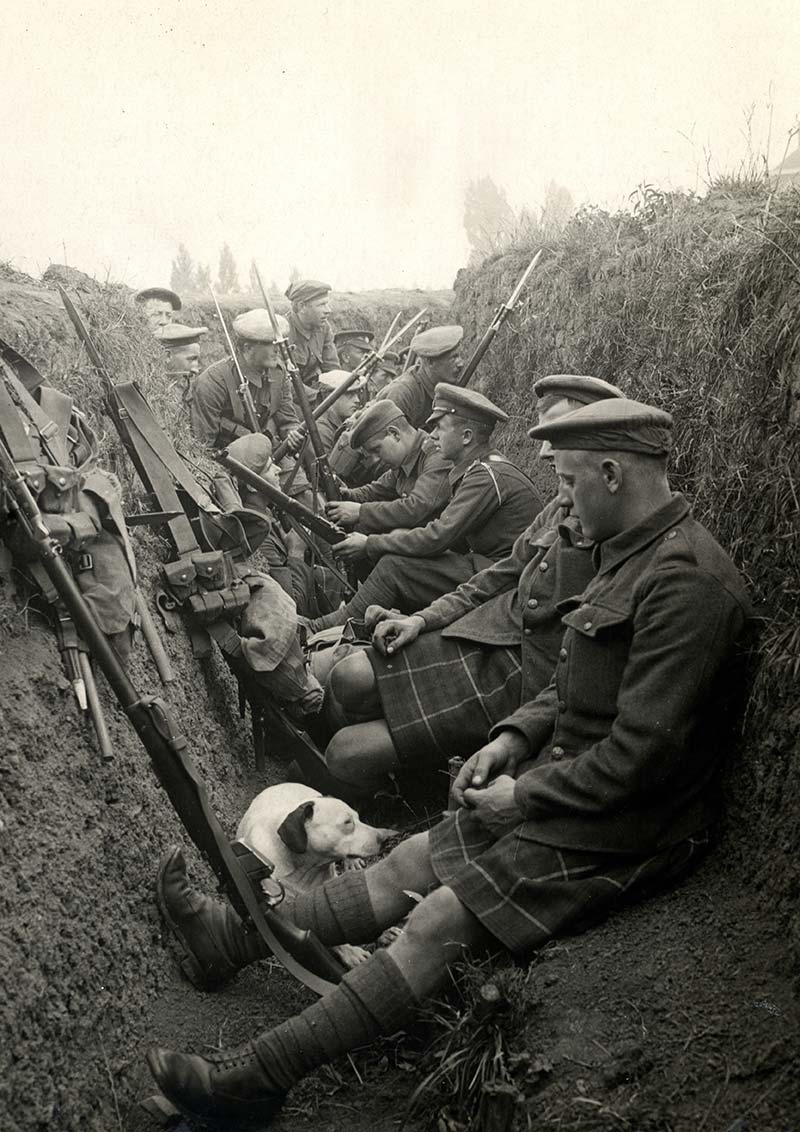
The War to End all Wars
Neuve Chapelle, April 1917
By the flickering light of a couple of candle-stubs, four British officers were playing cards.
“I suppose they’ll be sending us up the line again soon,” one of them remarked. “Spring has sprung again. Time to dust down the Lewis guns and polish up the bayonets. The men have grown very stale in winter billets. It’s time we all had a bit of a run out; remind the Boches we haven’t forgotten him.”
Captain Gerald Thewlis made no response. He stared broodingly at his cards, then flung one down. The man who had spoken uttered a kind of half-amused snort.
“You do like your hearts, don’t you, skipper. Anyone would think you were in love. What do you fellows think?” He looked round at the other silent officers, each intently studying his cards. “Is the skipper soft on someone? Mademoiselle from Armentieres, and all that?”
Thewlis shot his subordinate a look that was not overly cordial. “Just play, will you, Hollister? Or don’t you have a poem to write?”
Lieutenant Hollister chuckled, unabashed. “Damned tricky, this poetry-writing lark. It’s finding words that rhyme I struggle with. Or at least, it’s not so hard to find words that rhyme – Boche and tosh. Gun and fun. Shell and hell. Haig and…vague. And so on. But it’s putting them into some sort of meaningful order so that they say something. Otherwise all one gets is a kind of gibberish sing-song. Not much use to anyone – unless you’re Jessie Pope.”
Continue reading >
Away to the north there was a distant rumble of artillery, but it died away and there was silence once more.
“I wonder if Fritz will ever make his move?” wondered Hollister after a few minutes of wordless play. “All he does is sit in his trenches on the nice high ground he’s occupied, and lob a few shells at us from time to time. But surely he can’t sit there indefinitely. After all, he wanted this war in the first place. He must be planning something.” Hollister looked round at his companions. He lit a cigarette and took a puff. The smoke writhed in the straggling candle flames.
“There’s a rumour Fritz has a new Secret Weapon,” he said slyly, casting speculative glances round the table.
“Yes, there’s always a rumour about that,” acknowledged one of the other officers, a Lieutenant Barltrop. “Just empty rumours, though. The huns never come up with anything new. They’ve no imagination.”
“What about the gas?” challenged Hollister. “He came up with that, didn’t he? Beastly stuff. So we had to make some then, just to keep up with him. I’d like to meet the fellow who first came up with the idea. I’d shake him by the hand and compliment him on his ingenuity.”
“How does one make gas?” wondered Parrish, a young subaltern, who had been frowning gloomily at his cards.
Hollister eyed him. “We feed Farlow a couple of cans of bully beef and some soup and get him to take down his trousers and fart in the direction of the Hindenburg Line. Farting Freddie Farlow, he’s known as. The trouble is, the last time he did it, the wind changed direction, and blew it all back over our trenches. Took out a whole brigade.”
A soldier appeared at the entrance to the dugout. “Excuse me sir,” he ventured. “Captain Thewlis?”
Thewlis looked round. “Yes? What is it?”
“Message from Brigade Headquarters, sir. The Colonel wants to see you.”
Hollister clucked his tongue. “Oh, dear. What have you been up to, skipper? Gross misconduct in the face of the VADs?”
“That was all dealt with,” said Thewlis, getting stiffly to his feet. “The girl decided not to press charges when she heard that you were in my company and that I had the authority to send you on a daylight raid against the Boche lines.”
He placed his cards face up on the table. “Looks like you’ll have to finish this game without me, gentlemen,” he announced, and picked up his cap. “I’ll see you later. Don’t let Hollister play that spade he’s got secreted up the sleeve of his shirt.”
The others rounded on Hollister, who loudly protested his innocence, then feigned surprise when a King of Spades slipped out from his sleeve onto the table.
“It must have stuck on a blob of candle grease,” he suggested.
Thewlis followed the soldier out of the dugout and made his way along the support trench. He hitched a ride in an ambulance back to HQ.
The bumpy journey was made doubly trying by the groans of a man suffering from a rather nasty wound in the buttocks which looked likely to make the response to the invitation to be seated “Thank you, sir, but I prefer to stand” for some time to come.
“Don’t you worry,” Thewlis said to the wounded man as they lurched along the rutted and shell-pocked road. “They can replace anything these days. Wooden legs, glass eyes, Rupert Brooke facemasks. I’ll bet some enterprising company back home will make you an artificial arse. Some foam rubber should do it, packed in a pigskin pouch. Are you a churchgoing man?”
The soldier looked at him uncertainly. “Well, I used to go, sir,” he said, with an effort. “The missus made me. I’m not what you might call a God-fearing man, though.”
“Every cloud has a silver lining,” Thewlis told him. “No more sitting on uncomfortable pews for you, old boy.”
The soldier brightened. “I never thought of that.”
“And think of the kudos you’ll be able to reap,” continued Thewlis, warming to his theme. “Some men gave their lives for England. You gave your arse.”
The soldier grinned. “I was happy to give it, sir,” he said. “The Kaiser’s welcome to it, if he can find it.”
The ambulance juddered to a halt. They had arrived. Thewlis thanked the ambulance driver. From the field hospital it was but a short walk to HQ, and he saluted the sentry.
Colonel Bywaters’ office had moved again; a surprising hit from a long-range German shell had demolished it. Luckily, if that was the word, the Colonel had not been in at the time, having been, in an ironic twist, inspecting troops in a forward position. After several inquiries, Thewlis found the door, and knocked.
“Come,” growled a voice.
“Ah, Thewlis. What took you? Never mind; sit down. Drink?”
“Very civil of you, sir.”
The Colonel poured them each a whisky. “Chin-chin, what?”
“Chin-chin, sir.”
The Colonel put down his glass. “Right; to business. Now, the reason I’ve summoned you here today is to brief you on something new that’s come up. The war is about to enter a new and decisive phase.”
“Really sir?” said Thewlis politely, though not quite politely enough for Bywaters to miss the scepticism in his tone.
“I know what you’re thinking, Thewlis. The latest Big Push, Last Heroic Thrust, Final Victory Imminent. Yes. We’ve had a few false dawns, I’ll admit. But this time it’s going to be different.”
Thewlis said nothing. The Colonel eyed him keenly, then gestured to a plate on his desk. The plate was covered by a gleaming metal lid that might have been silver but was probably pewter.
“Do you see that?” he demanded.
“Yes sir,” affirmed Thewlis.
Bywaters moved to his desk and lifted the lid from the plate with a flourish.
“Do you see that?” he demanded again.
Thewlis looked. “It’s cake, sir.”
“Exactly!” said Bywaters. “Cake. And it’s cake that is going to win us the war.”
He lowered the lid and placed it on the desktop.
“I’m not sure I understand, sir,” said Thewlis, taking care to keep his tone neutral.
“Allow me to explain,” said Bywaters, a slightly twisted smile on his face. “But first of all, let me ask you a question: how many men do you think have been killed in this war thus far?”
“Ours or theirs, sir?”
“Ours – theirs – everyone’s!”
“Ohh, that’s hard for me to give an accurate figure, sir,” said Thewlis slowly. “It must be in the millions, I’d have thought.”
“Comfortably in the millions,” agreed the Colonel with a certain ghoulish satisfaction. “At least eight million, probably more. With thousands more killed every week.”
“Yes, sir. Most regrettable.”
“It’s more than regrettable, Thewlis. I mean, it’s regrettable for the men themselves, and probably somewhat disappointing for their wives and loved ones. But it’s worse than that: it’s unsustainable.”
“But what about the tactics of attrition, sir?” ventured Thewlis. “I was always under the impression that Field Marshall Haig was a firm believer in attrition. It can only be a matter of time before we win – by a process of prolonged attrition. Costly, yes, and tough on the chaps who are being attritioned (is that a word?) but ultimately – what else is there?”
“I’ll tell you what else there is, Thewlis – cake, that’s what there is.”
He lifted a slice of cake from the plate, bit into it, and munched, staring steelily at his subordinate.
For the first time, Thewlis began to feel faintly uneasy. “I’m still not sure I understand, sir,” he said stiffly.
“Well, let me explain then,” said Bywaters, brushing cake crumbs from his moustache. “Now, see here: every week, us and the huns lose a number of our men, right? Right. Sometimes we kill more of them, sometimes they kill more of us, but it’s more or less even. But what if we could reduce this butcher’s bill – to zero?”
“But surely that’s impossible sir?”
“Nothing is impossible to the true Military Mind,” retorted Bywaters with a disconcerting hubris that the six hundred thousand British casualties of the Somme Offensive had discovered to their cost was not really justified. The Colonel glared at Thewlis.
“It has been agreed, by our own High Command, and that of the Imperial German Army, that from next Sunday at midnight, there will be a ceasefire along a stretch of the western front from here at Poissy – “ he indicated the place on a map on the wall of his office “ – to here, at Pleunck, some fifty miles south. All hostilities will cease. At least, all those using conventional armaments. However, from that date, both sides will adopt a new form of warfare: warfare based entirely on the projection, via modified artillery pieces, and delivered hand to hand by infantry units, of cake. Cake will be the new weapon of choice. Anyone attempting to reignite hostilities using conventional weaponry such as machine guns or small arms will be court martialled and shot. It is believed by both senior commands that this will reduce casualty rates to almost zero. Oh, there’ll be a few chaps complaining of tummy-aches, and probably an increased level of sluggishness among the men, but the bloodbath will end. That does not mean,” he added, continuing to glare severely at Thewlis, “that the war will be over – far from it. It will continue; but it will be conducted in a way that will preserve life, not destroy it, while allowing both sides – both of us proud military powers – to maintain our honour in the field of battle.” He paused, and cocked an eye at his captain. “Well, Thewlis; what do you think?”
Thewlis scratched his ear. “I must say, sir, this is all rather unexpected. I was expecting to be told of a new Push, or perhaps a new and improved tank coming into the front. I wasn’t expecting – well, cake.”
Bywaters grinned at him. “I daresay you weren’t, young man, but cake is what it is. Already our bakers are working flat out. We’ve got French patissiers working round the clock, turning out everything from delicious madeleines to naughtily scrumptious tarte aux citrons.” He chuckled. “Those huns won’t know what hit ‘em!”
The news that there was to be a ceasefire was greeted with surprise and relief in almost equal measure. The news that hostilities were to be continued, but using cake instead of conventional ordnance was greeted with bafflement and bemused expressions.
However, once it became apparent that High Command were in earnest, the men quickly adjusted to the reality, as British tommies always did. Artillery pieces along a fifty-mile stretch of the front were converted so as to be able to deliver the new projectiles. It was not long before both sides were enthusiastically bombarding each other with tasty morsels.
“Getting hot, sir,” shouted Sergeant Cardew to Thewlis as the latter made his way cautiously along the trench to where a platoon was huddled below the parapet. “Fritz is sending over some of his heavy stuff.”
“What is it this time?” asked Thewlis. The sergeant picked up a fragment of cake that had landed on his shoulder, sniffed it, then popped it into his mouth.
“Stollen, sir. Tastes like stollen to me.”
Just as Thewlis opened his mouth to reply, there was a loud pop, and a large chunk of pale cake landed just behind the rear wall of the trench and burst, showering the huddled soldiers with crumbs.
“The swine.” Thewlis shot a furious glance from beneath the trim of his cake-stained tin helmet. “Keep your heads down, you men. I’m going to telephone Battery number four to give them something back. They’ve just had a fresh consignment of rock cakes in from Bugton’s Bakery in Glossop this morning.”
Sergeant Cardew smiled grimly. “That should make Fritz think twice, sir,” he shouted, as more cakes whistled softly overhead. It was not really necessary to raise one’s voice any more, but old habits died hard.
Thewlis moved on, hunching his shoulder and stooping low to avoid the bursts of stollen still landing nearby. He made his way slowly to a forward post.
“Anything to report, private?” he asked a young soldier who was peering through a periscope.
“Nothing much, sir,” replied the soldier. “We did hear that a few miles that way – “ he jabbed a thumb towards the south “ – the Frenchies came under attack by about sixty Austro-Hungarian grenadiers armed with Viennese whirls. They repelled them, though; Those schnitzel-scoffers are no match for the poilu. The Frenchies beat them off with a sustained barrage of flan de framboises and choux pastry.” He chuckled.
“Good show,” said Thewlis approvingly. Their French allies had taken to the new form of warfare with gusto, and were mustering their considerable talent for patisserie to great effect. It was nice for them, he thought kindly, after all the carnage they had sustained at Verdun. That had almost pushed the French Army out of the war, but the new initiative had come at just the right time for them.
After completing his rounds, Thewlis returned to his own dugout. Hollister was slumped morosely at the rickety table, apparently brooding.
Just then a Corporal named Hammings appeared. “Slice of cake, sir?”
“I couldn’t so much as look at a slice of cake, Hammings,” he moaned. “Clear off, will you?”
“But sir – it’s my granny’s seed cake; she makes a lovely bit of seedy-cake, does gran. Just arrived in a parcel. Won’t you have some?”
“No, I will not,” said Hollister coldly. “Give it to the artillery chaps. They can always do with extra ammo.”
The Corporal shrugged, and withdrew.
“I must say, the general public have certainly risen to the challenge of this new form of warfare very well,” remarked Thewlis, removing his helmet and brushing off a few crumbs. “They’re baking all kinds of cakes for our howitzers faster than those fellows can fire them off at Jerry.”
Hollister continued to look gloomy. “Dammit, sir, I know I shouldn’t say it, but all this blasted cake is starting to get me down,” he grumbled, rising stiffly and running a hand through his hair. “When will we ever be allowed to have real pop at the hun – with bullets, I mean? All this nonsense is being taken too far; there’s even talk of extending the length of front where the cake armistice is to be observed. I’m a soldier, sir, not a damned baker. I signed up to kill Germans, not treat them to delicious Chelsea buns and fondant fancies.”
“Let’s not have any of that sort of chat, Hollister,” said Thewlis sternly. “You know as well as I do that since we switched to cake, casualties have fallen to practically zero. Apart from that fat idiot Blenkinsop, choking himself to death on a wedge of Victoria sponge, we haven’t had a single fatality.”
Hollister shivered. “Don’t remind me, sir. I’ll never forget Blenkinsop’s face. A hanging face, it was, like a devil’s sick of sin. I still have nightmares about it. In all my dreams, before my helpless sight, he plunges at me, guttering, choking – “
“Yes, well, can’t be helped,” interrupted Thewlis curtly. “War is war, Hollister. Blenkinsop wasn’t a bad sort, really, but this wasn’t the place for him – he just loved cake too much. Of course, keenness in the men is to be encouraged – but Blenkinsop didn’t know when he’d had enough. A safe desk job back in Blighty was what he really needed, but as soon as he heard about the cake out here, he enlisted like a shot, from what I can gather. ”
“I know, sir,” sighed Hollister. “But I’m afraid I can’t help it. I had to drill some new recruits in bayonet training this morning. But instead of carving up the straw dummies we used to use for practice, they were using their bayonets as cake-slices – cutting up a date-and-walnut and handing out the stuff to the rest of the chaps to take across to Fritz.”
“Yes. I see. Well, hopefully we’ll see some action ourselves soon enough, Hollister. Care to play a hand at whist?”
Thewlis was proved right. The next day, word came from HQ that a major offensive would be staged on the fifth day of next month – May. It was planned to hit the Germans hardest in their most vulnerable area – the Forty-First Battenberg regiment, relatively new in the line and still to get used to their new cake-based weaponry after years of fighting on the Ypres Salient with live ammunition.
Every day, the rumble of transports could be heard, lurching up the pave, loaded to the brim with carrot cake, Bakewell tarts, lemon slices, upside-down cake and even some wickedly naughty chocolate sponge – ‘Death by Chocolate’, some wag had called it. Rhubarb crumble, though not strictly speaking a cake, was being pressed into service by the secretive special ops wallahs. A makeshift pipeline was rigged up by the sappers so sufficient quantities of custard could be pumped to where it was needed.
In the rearward areas, intensive training was taking place: bluff, craggy-faced fellows from the King’s Own Yorkshires drilled intensively with Eccles cakes, while not to be outdone, the Black Watch and the Gordon Highlanders utilised the offensive properties of the humble Dundee cake to devastating effect.
As Thewlis had observed, the general public had responded to the new type of warfare with enthusiasm. The fact that they no longer dreaded the arrival of the postman bringing terrible news resulted in a warm feeling towards the Top Brass that had never existed before. Those left at the home front continued to send out parcels, but where before cakes had been a firm favourite with the troops, now more savoury treats were preferred. Cake continued to be sent out too, but to rearm the artillery pieces rather than to nourish the infantry.
After a wait which, under the old system would have been undertaken with feelings of hollow dread uppermost in the minds of the combatants, the day of the attack arrived.
Morale was high, and as the officers made their way among the assembled troops, many a joke and cheery word was exchanged. There was a real feeling of optimism, that this time this Push would, finally, be the decisive one. After months and years of setback and disappointment, the men felt that it was time for their luck to change.
Thewlis checked his equipment: whistle, cake slice, his webbing, consisting of pouches containing small but tasty rock cakes, serviettes for wiping away cream from his battledress, a small phial of vanilla essence, hundreds and thousands, and a pot of chocolate sprinkles. He glanced across to where a squad of his men were carefully lifting a cake-dish holding a delicious-looking jam sponge. In the often waterlogged trenches, soggy bottoms had been a real danger, but fortunately the weather was much better now – Spring really was in the air.
Thewlis put his whistle to his lips and blew a shrill blast.
With a ragged cheer, the men swarmed up the ladders, cakes at the ready.
A few almonds and chunks of what could have been a tart of some description came whistling towards them. Some men were hit, but battled on.
And then, to their astonishment, out of a haze of smoke laid down by some die-hard gunner who still clung to the old ways, came a wave of field-grey-clad figures.
It was the hun!
He was making a counterattack! Or rather, he had clearly decided on the exact same moment to launch his offensive as the British had chosen to make theirs. An event of almost unprecedented rarity.
“Stand fast, you men!” shouted Thewlis, gesturing furiously.
Suddenly a huge Prussian loomed up before Thewlis. He was holding a plate containing some Teutonic-looking monstrosity, oozing with cream and darkened fruits.
“Vould you care for some Black Forest Gateau, Herr Englander? It is ze finest cake that ve Germans have in our pantry – and it is going to vin us zis var!”
Thewlis sneered. “Don’t make me laugh. I thought you huns didn’t have a sense of humour, but this really takes the biscuit.”
The Prussian eyed him pityingly. “It is not a biscuit. It is a cake. Surely even a dummkopf like you can see zat.”
Thewlis opened his mouth to explain that he knew what the Prussian presented to him was a cake, not a biscuit, that that was merely a figure of speech, but then thought better of it. Grudgingly, he took a morsel and popped it between his lips, frowning.
“Hmm – rather too sickly for me, old man. And what are these dreadful slimy cherries? Have they gone rotten or something?”
“Those? Those are Schwarzkirschen, you fool,” snapped the Prussian. “Black cherries. Are you telling me you’ve never seen those before?”
“Can’t say I have,” admitted Thewlis. “Our cherries are a healthy red colour, not like those cadaverous entities you have lurking amidst the sponge. They look more like prunes than cherries, if you ask me.”
Now is was the Prussian’s turn to frown. “Prunes?”
“Yes. Dried plums. Helps keep you regular, if you’ll pardon the expression.” He paused. “Look here, old fellow: why don’t you try some of this Victoria sponge? You look like you could do with some decent cake for a change. You can’t go wrong with good old Victoria sponge, you know. Go on – I’ve tried some of your stuff; now you try some English cake.”
The Prussian looked irritated, but took a slice of the proffered sponge.
“Hmm…Not bad, I suppose,” he grudgingly conceded. “But not terribly exciting is it? Like so much of your British cuisine – bland.”
“Bland?” Thewlis felt his hackles rising. “Now just you look here – “
Then something made him pause in mid-flow and look around him.
All up and down Nomansland, similar encounters were taking place. Both sides had stopped charging forwards and instead were engaging in earnest conversations about their respective cakes. Tommies waxed lyrical on the virtues of fruitcake and muffins, while Prussians, Bavarians, Schleswig-Holsteiners and a host of other fritzes, tried equally strenuously to convince their adversaries of the delights of Kaffeekuchen, Spritzkuchen and Bienenstich. One over-zealous trooper went so far as to rub a handful of gateau into a British corporal’s face, almost causing a fight to break out when his comrades saw this. But their fists were lowered when the corporal, wiping cream from his eyebrows and licking his fingers, reluctantly conceded that the gateau “weren’t half bad, really – for Foreign Food, like.”
Thewlis took a step back uncertainly. His Prussian counterpart was eyeing him, half-warily, half with a certain bemused affection.
At that moment, to his even greater astonishment, who should come panting up to him but Colonel Bywaters.
“Ah, Thewlis! There you are – been looking for you everywhere. Latest dispatch from HQ – wanted to deliver it personally, rather than send a runner; though I think I might be getting a bit old for this kind of thing…”
“What is it, sir?” demanded Thewlis.
“Suspend the attack. Call it off. With immediate effect.” Bywaters’ sweating face was glistening with excitement. “Do you hear me, man? The bloody war’s over! It’s over!”
Other men standing within earshot heard this and a great cheer went up. “’Ear that, Nobby?” shouted one soldier to his pal. “The war’s over! It’s over mate! Officer said so!”
The news spread up and down the line like a creeping barrage. Men of both sides cheered, wept, flung their arms around one another. “Kamerad! Kamerad, Tommy!” “Orright, Fritz, mate? How ya doin’ me old cock-sparrer?”
The Great Cake Offensive of 1917 had paid off; both sides lay down their weapons and peace – blessed peace – finally broke out.
Afterword
By Major-General Sir Maurice Farrah-Brisket DSO
No-one who lived through those momentous years is ever likely to forget them. Those least likely of all to allow them to fade upon his memory are those of us fortunate enough to have seen them through to their triumphant conclusion, that day at Neuve Chapelle on the Western Front, scene of so much previous bloodshed, when foeman faced foeman, not with rifle and cold steel, but with cake, jam and icing; not with a frown and shouted curse, but with a smile and the offer of something tasty.
I used the word ‘triumphant’ just now. A triumph for whom? Why, for everyone; historians may hotly contest who indeed ‘won’ the War. Was it ourselves? Well, I venture to say, in all modesty, that I love my country and consider myself a true patriot. But for all that, I do not lay claim, as others do, to a ‘British victory’. Nor do I revile those on the other side who insist that the victory was Germany’s. No, in my humble opinion, the victory must be shared. This is not, as some have indignantly suggested, to render meaningless the sacrifice made by those of our countrymen, and of others in our Empire, who were not so fortunate as to have survived the dreadful early years of that conflict. We can afford to be generous – and so, I think can our erstwhile enemies. There are no ultimate victors, and no vanquished; we are all winners. That is what I meant by ‘triumphant’.
Did it change the world? Well, of course it did – how could it not have done? I put that same question to Wilcox, my old batman the other day. (A fine fellow – I decided to keep him on as my personal secretary after the War; I never knew a chap like Wilcox for getting a razor-sharp crease in one’s trousers). I remember he scratched his ear and looked thoughtful.
“Yes sir, I suppose you could say it changed things a bit,” was his considered opinion; typically undemonstrative, as the British Tommy always has been. In what way? I wanted to know. He favoured me with a mild glance. “Well sir – I don’t mind trying foreign food now so much. Never used to be able to abide it. But some of it’s alright. Of course, we had a bit of French stuff over there, but that was still mainly egg and chips. No, them Germans can turn out a nice bit of cake – don’t mind giving ‘em credit where it’s due.”
Of course, it was inevitable that we should all find a new taste for each other’s cakes and pastries – it could scarcely have been otherwise. But even more important than that, surely, is the way it changed warfare for good – in every sense of the word. No longer does man take up arms against his brother. Now, if two nations find they have differences, rather than mustering thousands of men and the resources of manufacturing industry to try to exterminate each other, they sit down to a nice slice of cake and a cup of tea, and thrash out their differences that way. Far more civilised, I am sure you will agree.
Yes, I think I can safely say that, thanks to cake, the Great War really was what it claimed it would become – the War to End all Wars.
M F-B, Godalming, 1927